Are you looking for something nautical related? Our directory is an extensive list of courses and places associated with the marine industry. Hop over and search now.
We believe every day’s a school day on a boat! That’s why we built Nautical Know-How, dedicated to answering your questions. Even better, if it can’t answer your question immediately, you can request it, and we’ll add it to our knowledge base.
Ahoy, fellow sea wanderers! If the smell of salt in the air, the rhythmic slap of waves against the hull, and the endless horizon call to your soul, you’ve found the right place. The Salty Sea Blog is a place for musings on sailing—whether it’s the thrill of a stiff breeze filling the sails, the quiet magic of a sunrise at anchor, or the camaraderie found in harbours worldwide.
From salty old sea dogs to fresh-faced deckhands, this blog is for anyone who finds peace, adventure, and a bit of mischief on the water. So hoist the main, set your course, and let’s sail into the stories, lessons, and musings that make life on the sea so irresistible.
When you’re at sea, understanding the weather isn’t just about checking your app — it’s about reading the sky, feeling the wind, and spotting pressure trends. These natural signs often give you far more warning than a digital forecast. In this post, we’ll explore how to identify common cloud types, interpret wind shifts, and understand…
So, you’ve completed the theory and booked your Day Skipper Practical Course. But what’s it actually like to live, learn, and sail as skipper for the first time? Whether you’re feeling excited or a bit nervous, this guide walks you through what to expect from day one to your final sail. ⛵ Welcome Aboard: Your…
Mastering Tidal Precision for Sailing and Motoring Ferry gliding is a brilliant technique that harnesses the tide’s power to move your boat smoothly across the water without battling the current head-on. It’s a vital skill for mooring under motor or sail, navigating tight spaces, working with (rather than against) the elements. What is Ferry Gliding?…
Chart plotters have revolutionised how we navigate, making real-time position tracking, route planning, and decision-making more accessible than ever. Central to this technology are waypoints—specific geographic points you plot on your electronic chart. By linking waypoints together, you can plan a passage and monitor your performance using data like Bearing to Waypoint (BTW), Distance to Waypoint (DTW), and Cross…
We’ve compared the best Online RYA Day Skipper Theory Course Providers Updated for 2026. Are you ready to take the helm? If you’re planning to skipper your own yacht or want to gain confidence with coastal navigation, an RYA Day Skipper Theory course is an essential step. We’ve checked course pricing, syllabus format, access options,…
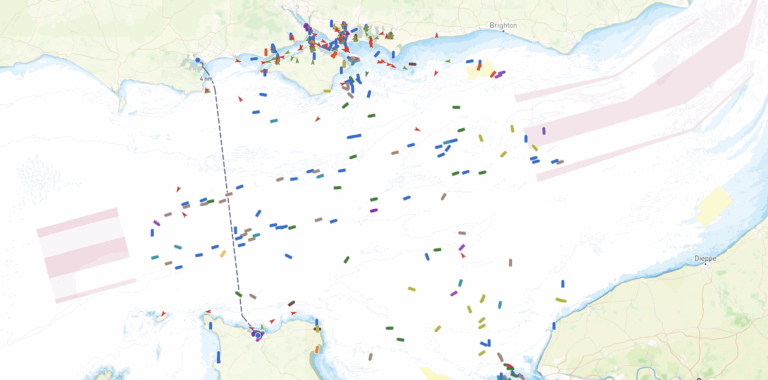
From Overwhelmed to In Control – Stress-Free Passage Planning with APEM If you’re new to navigation and planning your first cross-Channel trip, the process can feel overwhelming. That’s where the acronym APEM comes in—Appraise, Plan, Execute, Monitor. These four steps help ensure your passage is safe, legal, and enjoyable. Let’s walk through each stage, using…
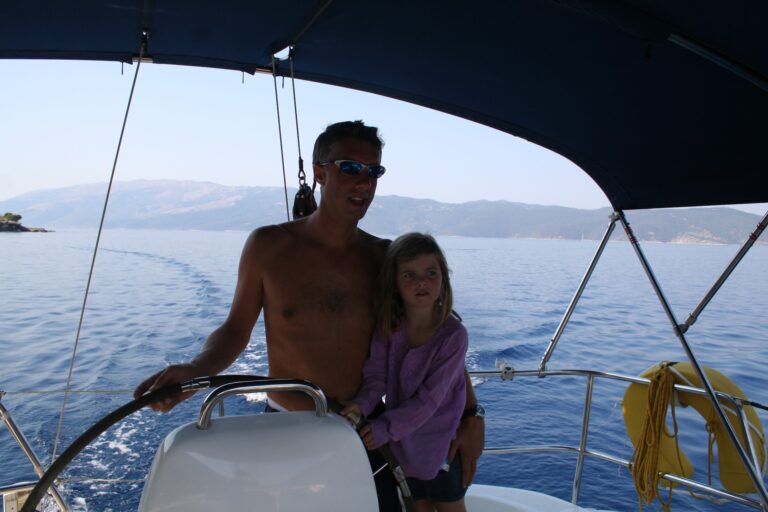
Thinking of a family sailing holiday in Greece? Here’s why the Ionian is perfect for beginners—and how to get qualified in time for summer. 🌴 Why the Ionian Is Perfect for First-Time Sailors 🛥️ Do You Need a License to Charter a Boat in Greece? Yes—but it’s simpler than you might think. To charter a…
Don’t just sail—speak the language. Master key nautical terms before you hit the water. Sailing isn’t just a sport or a way to travel—it’s a world of its own, full of colorful language rooted in centuries of maritime tradition. If you’re new to sailing, some of the vocabulary might feel like a foreign language. Why…
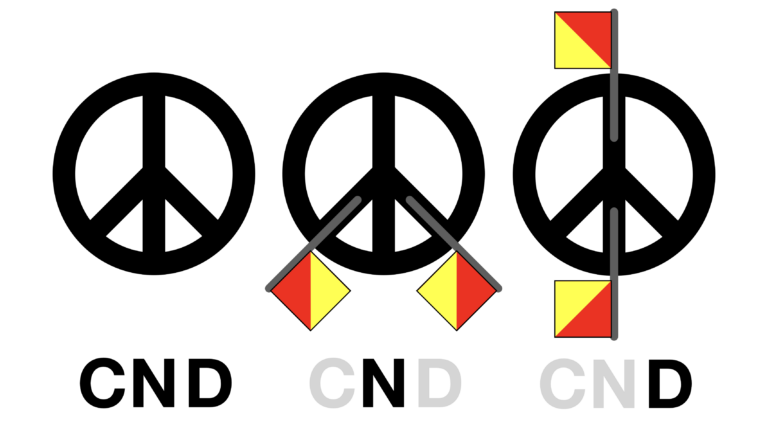
How a Maritime Signal Became the World’s Most Iconic Peace Symbol The Campaign for Nuclear Disarmament (CND) logo is one of the most recognisable symbols of peace in the world today. Often referred to as the “peace symbol,” it has transcended its original purpose and become a universal emblem of non-violence, anti-war movements, and global…
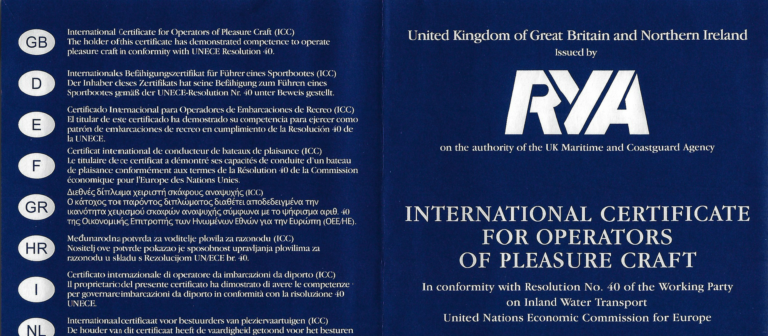
The International Certificate of Competence (ICC) is an internationally recognised qualification that certifies an individual’s ability to operate a pleasure craft safely. It is particularly useful for those who wish to hire or operate boats abroad, as many countries require proof of competence before allowing access to their waters. This guide outlines the steps necessary…
If you belive the Earth is flat, you're about to fall of the end...
If you belive the Earth is flat, you're about to fall of the end...
What are you looking for?
Our 1% commitment
Funding permanent carbon removal
My Sailing Course contributes 1% of every Stripe payment to help promising carbon removal technologies move from the lab into the field.
1% of each paymentA £100 payment creates a £1 contribution from us.Selected for impactStripe works with scientific advisers to select early-stage carbon removal projects.Our contribution is automaticWe make the contribution after every eligible Stripe payment. Customers do not need to opt in or pay anything extra.
Stripe Climate commitments fund the development and purchase of carbon removal. They are not carbon offsets or credits attached to an individual order.
Saved across My Sailing Course
My Favourites
Across My Sailing Course
Notifications
MY SAILING COURSE
Hello, Visiting Sailor!
Welcome to My Sailing Course. Where's this adventure going to take you?
Ahoy there, Visiting Sailor! Ask us anything—whether you need help choosing a course, have a sailing question, or want to speak to the crew.
MY SAILING COURSE
Messages
MY SAILING COURSE
Frequently asked questions
5 answers
How do I book my SRC (VHF) assessment?
After completing the online RYA Marine Radio SRC course, choose an available assessment slot with us or another RYA Recognised Training Centre. We offer scheduled assessment days and can arrange an individual appointment when the published dates are not suitable.
You must be at least 16 on the day of the exam and bring acceptable evidence of course completion or another qualifying radio certificate. You will also need the paperwork requested by the RYA, including a passport-sized photograph.
The RYA exam fee is currently £76 and is separate from any assessment-centre booking charge. Pay the RYA fee before the assessment and bring the resulting application paperwork with you. The official RYA SRC course and exam page has the latest eligibility, payment and document requirements.
How does the RYA Marine Radio SRC examination work?
The SRC exam must be completed in person at an RYA Recognised Training Centre. An independent examiner assesses both your practical use of a marine VHF radio and your knowledge in a written theory paper; the exam cannot be completed entirely online.
You must be at least 16 on the examination day and provide acceptable evidence of completing an RYA SRC course, an RYA Restricted VHF certificate, or a suitable aviation radio operator certificate. Online-course students should bring their course-completion evidence, the required application paperwork and a passport-sized photograph.
The current RYA exam fee is £76. It is paid to the RYA and is separate from any fee charged by the training centre for hosting or facilitating the assessment. Check the official RYA SRC exam page before booking because fees and administrative requirements can change.
Our scheduled SRC assessment appointments are booked in three-hour slots, with no more than three candidates in each slot. The appointment normally follows this order:
Check-in and review of your course-completion evidence, application paperwork and photograph.
Time to familiarise yourself with the training radios used for the assessment.
A practical assessment in which the examiner asks you to demonstrate marine-radio scenarios.
A short written theory paper. Our current assessment schedule allows 30 minutes for this multiple-choice paper.
Completion of the administration needed for the RYA to process your certificate.
The RYA confirms that the SRC exam contains both a written theory paper and a practical assessment. See the official SRC exam information for current eligibility and payment requirements.
What should I know about the RYA Marine Radio SRC course?
The RYA Marine Radio Short Range Certificate course prepares you to operate fixed or handheld marine VHF and Digital Selective Calling equipment correctly. The course takes around 10 hours plus exam time and can be studied online or in a classroom, but the final exam takes place in person at an RYA Recognised Training Centre.
Course subjects include basic radio operation, channels and frequencies, radio rules and procedures, Digital Selective Calling, the Global Maritime Distress and Safety System, and distress, urgency, safety and medical-assistance calls.
No previous experience is required for the training course. You must be at least 16 on the day of the SRC exam.
The RYA VHF Handbook is included with the course.
After completing the online learning, you will receive evidence of completion that you must present when taking the exam.
The SRC is the minimum qualification required to operate marine VHF radio equipment on a voluntarily fitted UK-flagged vessel. See the official RYA course and exam information.
Our scheduled SRC assessments take place in central Guildford, at the lower end of Guildford High Street. The venue is approximately a five-minute walk from Guildford railway station, with parking and tea and coffee available.
You can also take the exam at another RYA Recognised Training Centre if that is more convenient. The RYA requires the practical assessment to take place at a recognised centre; it cannot be completed entirely online. Use the RYA course finder to check other centres and confirm their dates directly with them.
Your account details are encrypted in transit and your password is never displayed or stored by this form. By continuing, you agree to our Terms & Conditions and acknowledge our Privacy Policy.
Before you sail away…
Join free to save your favourites, unlock bonus learning resources and keep everything nautical close at hand.
MY SAILING COURSECreate your account
Join the My Sailing Course community with one secure account for your courses, profile and support.
✓
Welcome aboard!
We've successfully created your account. Hold station for a few moments and you will be returned to the page.