
Skip to content
Nautical Know How
  • Our Courses

      All our courses are engaging, interactive and fun! Whether formal training or simply looking to brush up, we take online learning to the next level.

      • Sailing EssentialsFreeA free course great for anyone who spends time on the water.
      • Essential Navigation & SeamanshipRYA course for beginners. Learn charts, tides, pilotage, and core seamanship with simple practice tasks.
      • Day Skipper TheoryMost PopularRYA course for inshore skippers. Plan day passages using chartwork, tides, weather, and COLREGs.
      • Coastal Skipper / Yachtmaster® TheoryComing SoonRYA course for advanced navigation and passage planning. Work with secondary ports, tidal streams, and offshore weather.
      • SRC (VHF) Marine Radio CourseRYA Short Range Certificate radio course. Study online, then take the practical exam with an RYA assessor.
  • Directory

      Are you looking for something nautical related? Our directory is an extensive list of courses and places associated with the marine industry. Hop over and search now.

      • Places
        Find anywhere nautical, including marinas & training centres. If it exists, we’ve got it listed!
      • Courses
        We help you navigate through the complex world of training and help find what’s best for you.
  • Know-How

      We believe every day’s a school day on a boat! That’s why we built Nautical Know-How, dedicated to answering your questions. Even better, if it can’t answer your question immediately, you can request it, and we’ll add it to our knowledge base.

      • Nautical Terms & Terminology
        Understanding the language of the marine world is like trying to learn a pirate’s secret code while juggling fish. Let us explain why a sheet isn’t for your bed, why “heave ho” doesn’t mean throw up (most of the time), and why “dead reckoning” is surprisingly less ominous than it sounds.
      • Why do we have tides?
        Have you ever wondered what causes the tides? Check out this video, which introduces the forces that create the tides we experience on Earth.
      • What causes our weather?
        A video introducing the drivers behind our weather, part of our RYA Day Skipper & RYA Coastal Skipper / Yachtmaster® Offshore theory courses.
      • Buoyage Flashcards
        Flashcards designed to help remember the buoys in the IALA system. If you want to learn them in detail, our module ‘Getting in and out of harbour‘, covers the IALA system and different buoys used.
      • Interactive Rule Book (COLREGs / IRPCS)
        Whether you’re a novice sailor or a seasoned skipper, we can help you navigate the IRPCS confidently and clearly. Our easy-to-use, easy-to-understand, plain English rule book with helpful interpretations of what each rule means.
      • The Salty Sea Blog
        From salty old sea dogs to fresh-faced deckhands, this blog is for anyone who finds peace, adventure, and a bit of mischief on the water. So hoist the main, set your course, and let’s sail into the stories, lessons, and musings that make life on the sea so irresistible.
  • Chandlery
Sign In Join now—it’s Free
Nautical Know How
  • Our Courses

      All our courses are engaging, interactive and fun! Whether formal training or simply looking to brush up, we take online learning to the next level.

      • Sailing EssentialsFreeA free course great for anyone who spends time on the water.
      • Essential Navigation & SeamanshipRYA course for beginners. Learn charts, tides, pilotage, and core seamanship with simple practice tasks.
      • Day Skipper TheoryMost PopularRYA course for inshore skippers. Plan day passages using chartwork, tides, weather, and COLREGs.
      • Coastal Skipper / Yachtmaster® TheoryComing SoonRYA course for advanced navigation and passage planning. Work with secondary ports, tidal streams, and offshore weather.
      • SRC (VHF) Marine Radio CourseRYA Short Range Certificate radio course. Study online, then take the practical exam with an RYA assessor.
  • Directory

      Are you looking for something nautical related? Our directory is an extensive list of courses and places associated with the marine industry. Hop over and search now.

      • Places
        Find anywhere nautical, including marinas & training centres. If it exists, we’ve got it listed!
      • Courses
        We help you navigate through the complex world of training and help find what’s best for you.
  • Know-How

      We believe every day’s a school day on a boat! That’s why we built Nautical Know-How, dedicated to answering your questions. Even better, if it can’t answer your question immediately, you can request it, and we’ll add it to our knowledge base.

      • Nautical Terms & Terminology
        Understanding the language of the marine world is like trying to learn a pirate’s secret code while juggling fish. Let us explain why a sheet isn’t for your bed, why “heave ho” doesn’t mean throw up (most of the time), and why “dead reckoning” is surprisingly less ominous than it sounds.
      • Why do we have tides?
        Have you ever wondered what causes the tides? Check out this video, which introduces the forces that create the tides we experience on Earth.
      • What causes our weather?
        A video introducing the drivers behind our weather, part of our RYA Day Skipper & RYA Coastal Skipper / Yachtmaster® Offshore theory courses.
      • Buoyage Flashcards
        Flashcards designed to help remember the buoys in the IALA system. If you want to learn them in detail, our module ‘Getting in and out of harbour‘, covers the IALA system and different buoys used.
      • Interactive Rule Book (COLREGs / IRPCS)
        Whether you’re a novice sailor or a seasoned skipper, we can help you navigate the IRPCS confidently and clearly. Our easy-to-use, easy-to-understand, plain English rule book with helpful interpretations of what each rule means.
      • The Salty Sea Blog
        From salty old sea dogs to fresh-faced deckhands, this blog is for anyone who finds peace, adventure, and a bit of mischief on the water. So hoist the main, set your course, and let’s sail into the stories, lessons, and musings that make life on the sea so irresistible.
  • Chandlery
Sign In Join now—it’s Free
Published:25th October 202426th March 2025 Last Updated:26th March 2025
General Nautical Terminology

Harbour

A sheltered body of water where vessels can anchor or dock, offering protection from the elements, often also where ports are, providing facilities for loading, unloading, and maintenance.

A harbour is a crucial feature in maritime activities, designed to provide a safe and secure area for ships, boats, and other vessels to anchor or dock. It is typically situated along a coastline, river, or estuary, where natural or artificial barriers, such as breakwaters, jetties, or sea walls, help to shield the area from the direct impact of waves, tides, and wind. This protection is essential for ensuring the safety of vessels, particularly during adverse weather conditions. Harbours can vary significantly in size and complexity, ranging from small, local fishing harbours to large, commercial ports that handle international shipping traffic.

In addition to providing a safe anchorage, harbours are often equipped with various facilities to support maritime operations. These may include piers, wharves, and docks for mooring vessels, as well as cranes, warehouses, and other infrastructure for loading and unloading cargo. Many harbours also offer services such as refuelling, repairs, and maintenance for vessels. In some cases, harbours may serve as hubs for passenger transport, with ferry terminals and cruise ship berths.

Harbours play a vital role in global trade, fishing, and recreational boating, acting as key points of connection between land and sea.

What’s the difference between a Harbour and a Port?

Harbour

A harbour is a sheltered body of water where ships can anchor or dock safely. It’s more about the geography and protection from waves, wind, and storms.

  • It can be natural (a bay or inlet) or man-made (with breakwaters or sea walls).
  • Harbours provide a safe place for vessels to take shelter, load, or unload.
  • Not all harbours have facilities or infrastructure for commercial shipping.

Think of a harbour as the “car park” for ships—it’s where they can rest and stay safe.

Port

A port is a facility within a harbour (or along a coast) that has the infrastructure to support commercial or recreational shipping operations.

  • Ports include docks, cranes, terminals, warehouses, customs offices, fuel stations, and more.
  • Ports are where ships load and unload cargo or passengers.
  • Every port is a place of business, while a harbour might not be.

So a port is what you use, and a harbour is where you use it.

Port
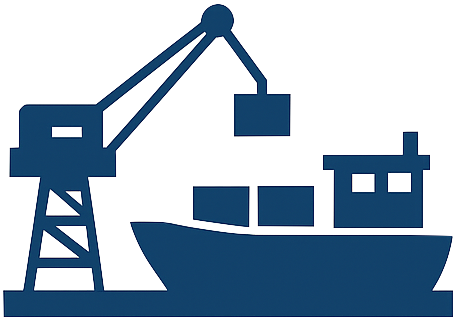
  • A facility where vessels load or unload, cargo or passengers.
  • Has docks, terminals or other infrastructure.

Harbour

  • A sheltered body of water where vessels can anchor or moor.
  • Protected by natural or artifical barriers.

Quick Analogy:

Imagine a harbour is like a garage, and the port is the service station inside—one provides shelter, the other provides services.
Terms with the same meaning:
Port
Related Content:
  • All Downloads
  • Buoyage Made Easy: The UK Guide to IALA Region A (with clear examples)
    Red to port, green to starboard—and what about cardinals, junctions and sector lights? This plain-English UK guide to IALA Region A turns theory into calm, tidy pilotage, with quick-reference downloads for lights and sound signals.
  • Digital Passage Plans for Inspection: What an RYA Instructor Likes to See
    Build a digital passage plan an RYA instructor can read in 60 seconds. Show “decisions for reasons” with clear evidence. • What they check: clarity, safety margin, reasons, alternatives, backup. • The 4-page pack: route overview, tides and streams, pilotage, weather and limits. • Prove your sources: chart edition, model run time, reference and secondary ports. • Keep it simple to share: GPX, PDF, and one printed summary. • Finish with a checklist you can copy. Read the full guide and make a plan that stands up to inspection.
  • Do I Need a Licence to Skipper a Yacht?
  • Don’t put all your eggs in one basket!

Quick Links

  • Join NowJoin now and get access to great content and free courses.
  • Nautical Know HowEverything nautical, explained simply.
  • Marine DirectoryFind Courses and Course Providers.
  • Community Views & NewsNews, views, tips’n’tricks.
  • Contact UsGet in touch, we love talking to people on our wavelength.

RYA Recognised Training Centre No: 920567214

Crafted with

Made with love

by My Sailing Course

Follow us:

  • Facebook
  • Instagram
  • X
  • TikTok
  • YouTube

Running on

Powered by

© 2025 – My Sailing Course (Part of The Sailing Business Ltd) | Terms & Conditions | Privacy Policy | Partnership Programme

Join for Free!

Join for free and get access to lots of resources and downloads, including our Sailing Essentials course.

Forgot Password?
Lost your password? Enter your email address and you will receive a unique code enabling you to create a new password.
Change
Please choose a new password for your entry in our ship's log.

  • Share on Facebook
  • Share on WhatsApp
  • Share on LinkedIn
  • Share on X
  • Email this Page

What are you looking for?

  • Sign In
  • Register
Forgot Password?
Lost your password? Enter your email address and you will receive a unique code enabling you to create a new password.
Change
Please choose a new password for your entry in our ship's log.
body::-webkit-scrollbar { width: 7px; } body::-webkit-scrollbar-track { border-radius: 10px; background: #f0f0f0; } body::-webkit-scrollbar-thumb { border-radius: 50px; background: #dfdbdb }