Are you looking for something nautical related? Our directory is an extensive list of courses and places associated with the marine industry. Hop over and search now.
We believe every day’s a school day on a boat! That’s why we built Nautical Know-How, dedicated to answering your questions. Even better, if it can’t answer your question immediately, you can request it, and we’ll add it to our knowledge base.
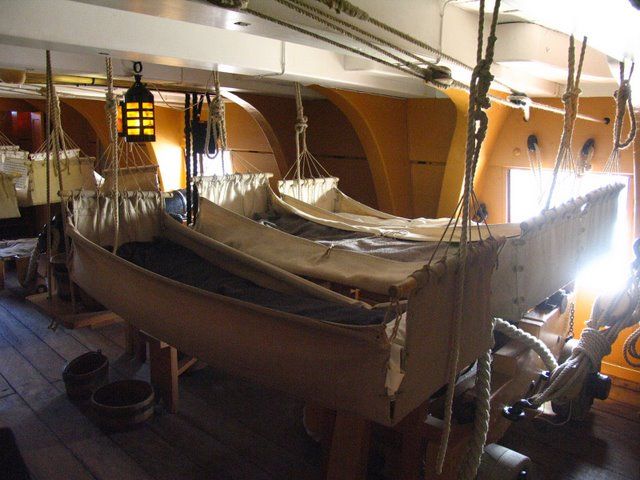
“Under the weather” is commonly used to describe feeling ill or unwell. Its origin can be traced back to maritime language and practices. Here are the key points of its origin:
Nautical Origins: The phrase likely comes from the days of sailing ships, when sailors used weather-related terminology. When sailors were unwell, they were often sent below deck to recover. The area below deck was shielded from the harsh weather conditions above, hence the phrase “under the weather.”
“Under the Weather Bow”: Another possible nautical connection is the phrase “under the weather bow.” The weather bow is the side of the ship that faces the wind and receives the brunt of the weather. Being under the weather bow meant being on the side of the ship that was more protected from adverse conditions, thus relating to feeling the effects of bad weather less directly.
General Maritime Hardship: Life at sea was tough, and sailors were frequently exposed to harsh weather conditions, which could lead to illness. Being “under the weather” could metaphorically represent feeling poorly due to the rough weather experienced at sea.
Overall, the phrase “under the weather” has its roots in maritime culture, symbolising the relationship between bad weather and feeling unwell, whether from direct exposure or as a result of being confined below deck to avoid the elements.
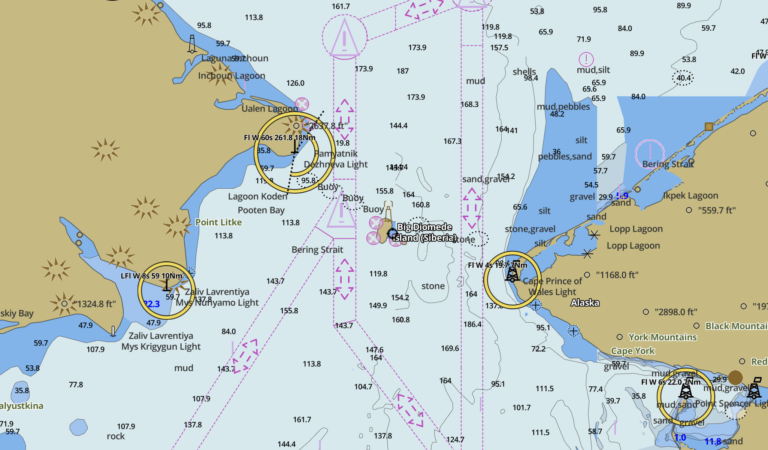
A Tale of Big and Little Diomede Ah, time travel. A notion that’s been tickling our imaginations for donkey’s years. H.G. Wells scribbled about it, Doc Brown cobbled together a DeLorean for it, and Doctor Who nailed it with a flying blue police box. But what if I told you that time travel is already…
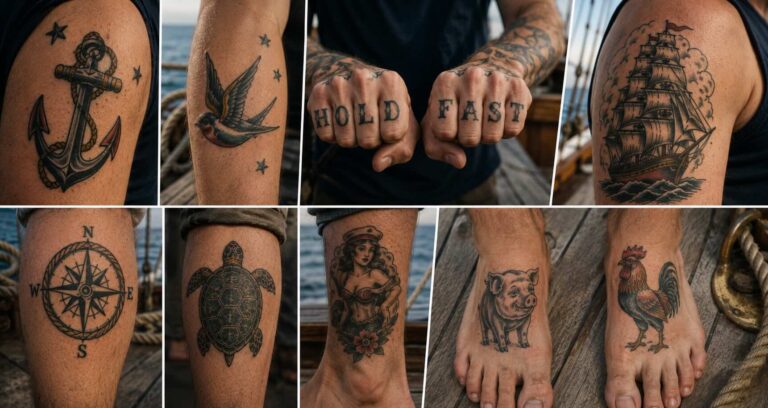
Nautical tattoos like anchors, swallows, compass roses and “Hold Fast” have deep roots in maritime history. This article traces how sailors adopted tattoos as symbols of achievement, protection and identity, from Cook’s Pacific voyages to modern yachting culture, and explains the meaning behind classic designs that still connect people to life at sea.
Jazz Turner’s Project FEAR is more than a circumnavigation—it’s a milestone in inclusive British sailing From 2 June to 30 June 2025, Turner charted a 2,070-mile self-supported course around the British Isles and Ireland. As the first female wheelchair user to complete this solo journey in her adapted 27‑ft yacht Fear, she combined endurance sailing with a…
Are charted depths based on the worst-case scenario? Traditional and electronic navigation charts (ENCs) provide us with an understanding of depth, particularly near the coastline. Generally, we ask ourselves: Can we float? After all, we don’t want to run aground! The numbers provided on charts give a likely worst-case scenario, known as chart datum. For…
The calm before the storm—literally. Explore the synoptic charts to see what’s behind #StormAmy and when the wind and rain arrive. #MetOffice #PassagePlanning
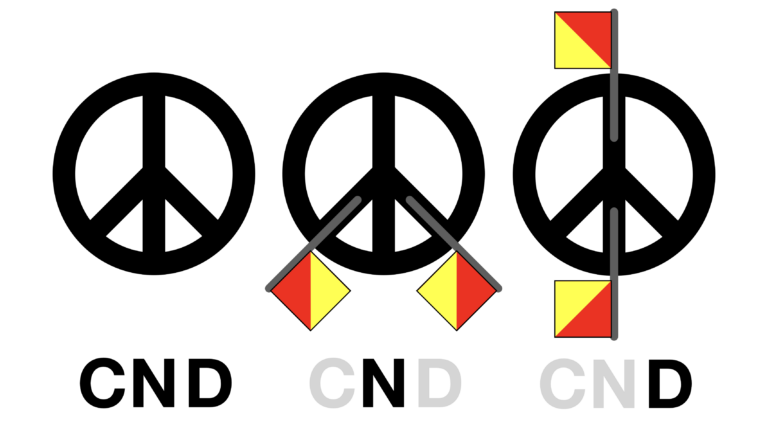
How a Maritime Signal Became the World’s Most Iconic Peace Symbol The Campaign for Nuclear Disarmament (CND) logo is one of the most recognisable symbols of peace in the world today. Often referred to as the “peace symbol,” it has transcended its original purpose and become a universal emblem of non-violence, anti-war movements, and global…
My Sailing Course contributes 1% of every Stripe payment to help promising carbon removal technologies move from the lab into the field.
1% of each paymentA £100 payment creates a £1 contribution from us.Selected for impactStripe works with scientific advisers to select early-stage carbon removal projects.Our contribution is automaticWe make the contribution after every eligible Stripe payment. Customers do not need to opt in or pay anything extra.
Stripe Climate commitments fund the development and purchase of carbon removal. They are not carbon offsets or credits attached to an individual order.
My Favourites
Notifications
MY SAILING COURSE
Hello, Visiting Sailor!
Welcome to My Sailing Course. Where's this adventure going to take you?
Your account details are encrypted in transit and your password is never displayed or stored by this form. By continuing, you agree to our Terms & Conditions and acknowledge our Privacy Policy.
Before you sail away…
Join free to save your favourites, unlock bonus learning resources and keep everything nautical close at hand.
MY SAILING COURSECreate your account
Join the My Sailing Course community with one secure account for your courses, profile and support.
✓
Welcome aboard!
We've successfully created your account. Hold station for a few moments and you will be returned to the page.